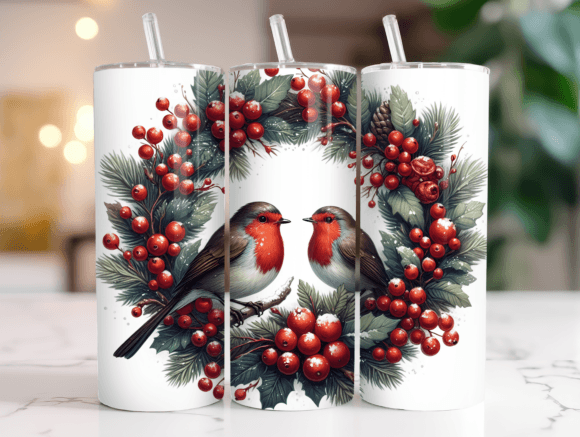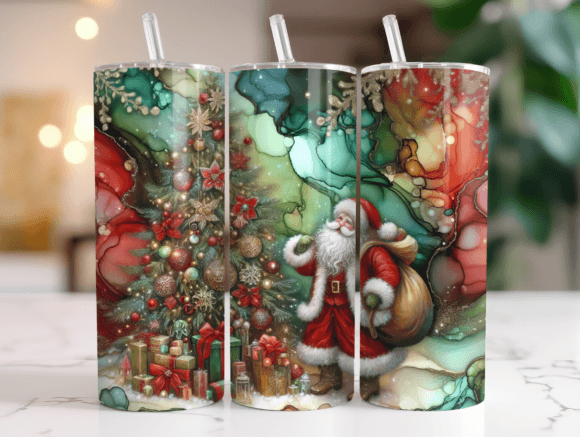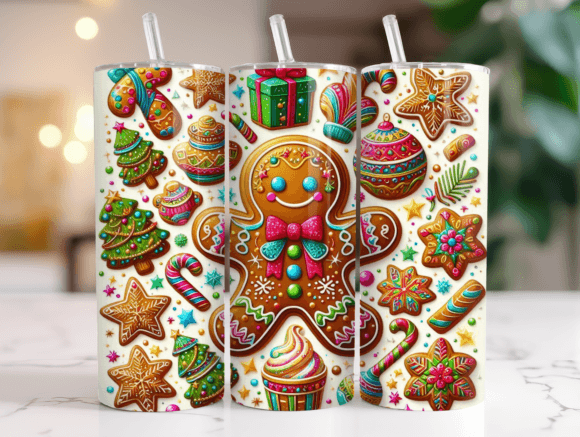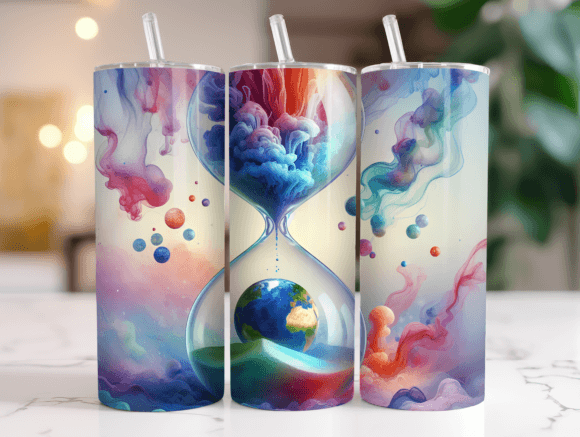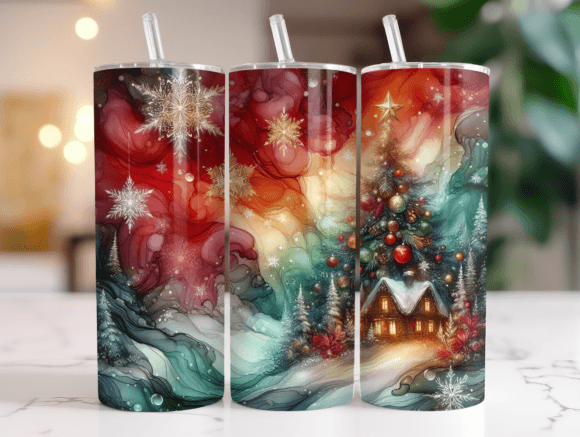
Christmas Alcohol Ink 20oz Tumbler Wrap
First Impressions: A Festive, Fluid Vibe — But Is It Embroidery-Ready?
When I opened the Christmas Alcohol Ink 20oz Tumbler Wrap, my first thought wasn’t “perfect for stitching”—it was “this feels like a holiday mood board come to life.” Swirls of cobalt, cranberry, and gold bleed softly into one another, evoking ink dropped into wet paper—organic, unpredictable, joyful. There’s no rigid outline, no crisp typography, no symmetrical wreath. Instead, it’s a fluid, painterly composition with subtle metallic shimmer implied in the digital layers. As an embroidery designer who’s stitched everything from tiny baby onesies to boutique aprons, I immediately asked: Where would this actually shine—and where would it struggle?
A Real-World Test: Turning It Into a Handmade Holiday Tote
Last week, I used the Christmas Alcohol Ink 20oz Tumbler Wrap as inspiration for a custom embroidered canvas tote—intended for a local craft fair booth selling personalized holiday gifts. I didn’t stitch the wrap directly (it’s designed for tumblers, not flat fabric), but I adapted its core motif: a simplified, centered alcohol-ink-style flourish with a single holly sprig tucked into the lower curve. The result? A tactile, elegant piece that stood out among geometric prints and script-based designs. Customers paused, touched the satin-stitched holly leaves, and asked, “Is that hand-painted?” That’s the power of this aesthetic—it reads as artisanal, not AI-generated—if adapted thoughtfully.
Where It Translates Beautifully
- Embroidered patches: Clean outer shape and moderate detail make it ideal for iron-on or sew-on patches on denim jackets or backpacks.
- Tote bag design: Large, open areas translate well to fill stitch without puckering; the organic flow softens the rigidity of canvas.
- Sweatshirt embroidery: When scaled to 4–5”, the design breathes across fleece or French terry—no dense stitch traps or fragile corners.
- Holiday gifts & nursery decor: Paired with ivory thread on oatmeal linen pillow covers or muslin baby blankets, it reads warm and intentional—not trendy, but timeless.
- Digital embroidery file for Etsy sellers: As a design asset, it offers visual distinction in saturated marketplaces—especially when bundled with coordinating motifs (e.g., minimalist candy cane, ink-blended snowflake).
Where Caution Is Essential
This isn’t a plug-and-stitch file for every surface. Its fluid edges and tonal blending create real challenges in machine embroidery:
- Small hoop sizes (<4”): Fine ink-like gradients vanish under tight stitching—details blur, and color transitions flatten.
- Textured or stretchy fabric: On ribbed knits or slubbed linen, the low-contrast swells and fades can disappear entirely without precise stabilizer pairing.
- Dark fabric: The design relies on light-to-mid tone variation. On navy or charcoal, much of the subtlety is lost unless you add reflective thread or strategic underlay.
- Curved surfaces (caps, mugs, curved tumbler wraps): The original layout assumes a flat, vertical band. Distortion occurs if forced onto complex curves without manual reshaping.
- Frequent-wash items (kitchen towels, baby clothes): High-density fill areas may stiffen over time; running stitch accents hold up better than ultra-fine satin details.
What It Adds to Your Finished Product—And What It Doesn’t
The Christmas Alcohol Ink 20oz Tumbler Wrap elevates perceived value through texture and artistry—not precision. It won’t replace a crisp monogram or technical applique design, but it does signal care, creativity, and seasonal intentionality. For Etsy sellers, that translates to stronger buyer engagement: shoppers linger longer on listings featuring this kind of visual personality. For craft fairs, it helps your booth feel curated—not crowded. And for small shop branding? Used consistently across tags, packaging inserts, and social mockups, it builds quiet cohesion.
That said, it doesn’t build trust through versatility. If your customers expect uniformity across apparel, home goods, and accessories, this design asks for thoughtful curation—not blanket application.
Practical Embroidery Designer Notes
- Test first: Stitch a 3” version on scrap fabric matching your final product’s weight and stretch.
- Check thread colors: Avoid relying solely on the digital preview—cranberry on cream looks rich; on black, it reads nearly brown.
- Review stitch density: Look for unintended nesting in overlapping ink swirls—adjust underlay if needed.
- Confirm hoop size: This design needs breathing room—aim for at least a 5x7 hoop for full clarity.
- Inspect small details: Does the holly berry hold shape at 1.5”? If not, simplify before digitizing.
- Mock it in black and white: Ensures contrast reads well on dark or textured backgrounds.
- Use proper stabilizer: Tear-away works for stable fabrics; cut-away is safer for knits or lightweight cottons.
- Verify licensing: Since this is a digital embroidery file generated via AI and Photoshop, confirm whether commercial use (selling finished embroidered products) is permitted—don’t assume.
Final Thought: A Design With Intention—Not Just Ink
The Christmas Alcohol Ink 20oz Tumbler Wrap isn’t background filler. It’s a statement piece disguised as whimsy. Used with awareness—scaled right, stabilized properly, and paired with complementary textures and threads—it becomes more than decoration. It becomes a reason someone chooses your handmade product over mass-produced alternatives. For embroidery designers and creative entrepreneurs, that’s not just practical. It’s professional leverage.